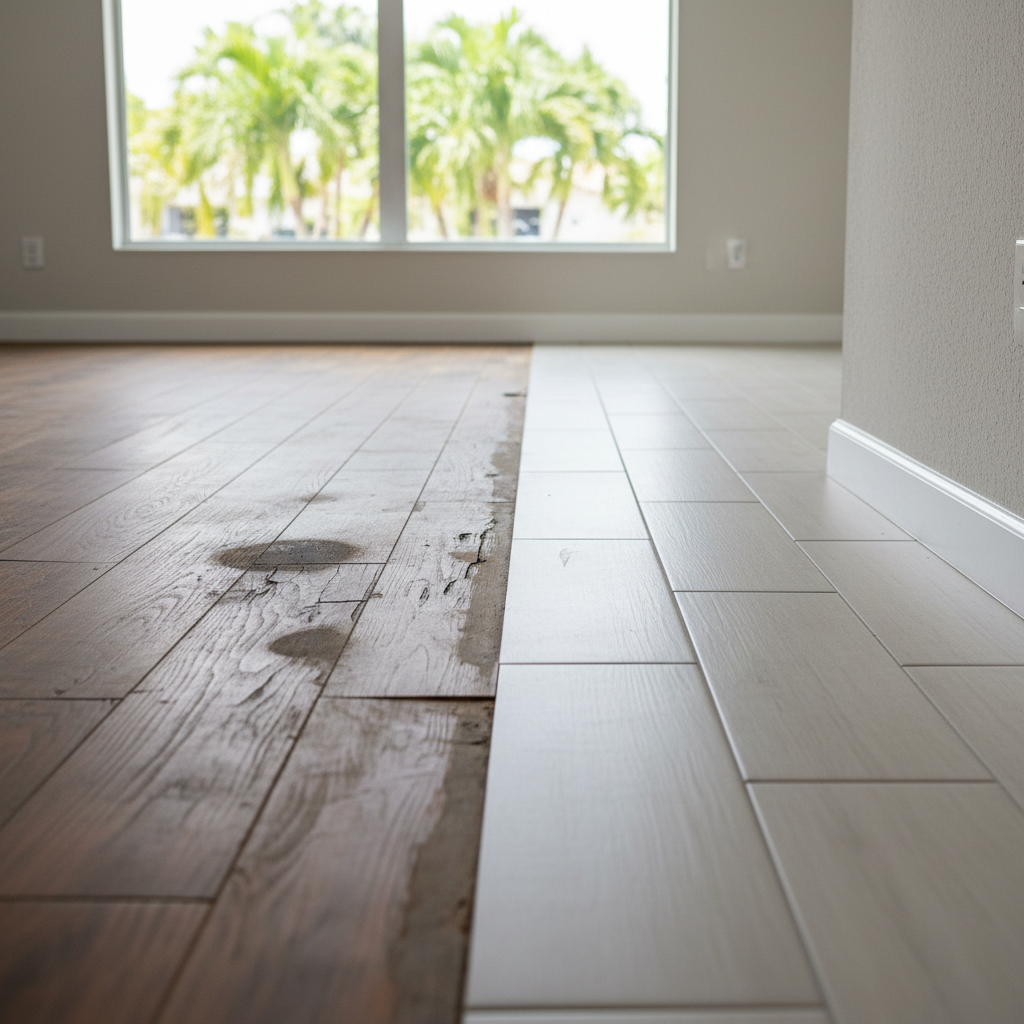
Alright, Miramar homeowners, let's talk about water damage. It's a real headache, no doubt about it. Once the water's gone and everything's dried out, you're still left with the actual damage. And that's where you hit a fork in the road: do you try to patch it up, or do you just go for a full replacement of the stuff that got wet?
I've seen folks try to save a buck by patching, and sometimes it works, sometimes it doesn't. Other times, they just don't know the difference between the two approaches. So, let's lay it all out. That way, you'll understand what you're really getting into with each option.
The Patch-Up Job: Quick Fix or Future Headache?
When I talk about patching, I mean fixing only the parts of drywall, flooring, or cabinets that you can actually see are damaged. Maybe you're cutting out a small section of water-stained drywall, replacing a few buckled laminate planks, or sanding and refinishing a cabinet door with a water mark. People often see this as the cheaper, faster way to go.
Cost
Upfront, patching is almost always less expensive. You're buying fewer materials, and the labor might be quicker. If it's a small, isolated spot—like a leak under a sink that someone caught fast—a patch can definitely save you some cash. No argument there.
Durability & Longevity
This is where patching can get tricky, especially here in South Florida. If the original problem wasn't completely fixed, or if the material was damaged more than it looks, that patch isn't going to hold up. You might fix the drywall, but if the stud behind it still has moisture or mold, you're just covering up a bigger problem. And with our humidity, mold loves to hide and spread, doesn't it? I've seen patches fail within months because folks underestimated the original damage.
Maintenance
A patched area might need more upkeep. If the new material doesn't perfectly match the old, or if the structure isn't 100% sound, you could see cracks, discoloration, or more damage over time. You might find yourself constantly touching it up.
Appearance
This is a big one. Matching existing textures, paint colors, or flooring patterns can be incredibly difficult. Even if you use the exact same paint, the new paint might dry differently, or the existing paint might have faded. You often end up with a noticeable seam, a slightly off-color patch, or a mismatched floor section. In a lot of homes in SilverLakes, where everything's pretty uniform, a patch can stick out like a sore thumb.
Full Replacement: The Long-Term Solution
Full replacement means tearing out all the affected material, even if some parts look okay, and putting in new, clean stuff. This could mean replacing an entire wall of drywall, a whole room of flooring, or all the lower cabinets in a kitchen.
Cost
Yes, full replacement is typically more expensive upfront. You're buying more materials, and there's usually more demolition and installation labor involved. That's just how it is.
Durability & Longevity
This is where full replacement really shines. When you remove all the materials that got wet, you make sure that any hidden moisture or mold gets dealt with. You're starting fresh. This gives you a much more durable and long-lasting repair. You won't have to worry about a patch failing because the surrounding material was secretly compromised. It's a clean slate, and that means you won't be stressing about it, especially when you're dealing with our Florida climate where moisture is a constant battle.
Maintenance
Generally, a full replacement needs less ongoing maintenance. The new materials are installed correctly, they're uniform, and they're built to last. You treat it like any other part of your home.
Appearance
When you replace an entire section, room, or set of cabinets, you get a seamless, uniform look. There are no mismatched patches or visible repairs. It looks like the water damage never happened. This is a huge plus for your home's aesthetics and its resale value.
My Recommendation for Miramar Homeowners
Look, I get it. Nobody wants to spend more than they have to. But from years of seeing water damage repairs in Miramar, I'm going to tell you straight: for most significant water damage, full replacement is almost always the better long-term solution.
Why? Because water damage is sneaky. It travels, it wicks, and it hides. What looks like a small stain on the surface can be much more extensive behind the walls or under the floors. Patching often leaves you guessing, and in a humid environment like ours, guessing is a recipe for mold growth and future problems. You don't want to be dealing with the same issue again in a year or two, costing you even more money and stress, do you?
A full replacement, done right by a professional like us at Absolute Restoration, ensures that all damaged materials are removed, the area is properly dried and treated, and new, sound materials are installed. It's an investment in your home's health and your peace of mind. You get a durable, aesthetically pleasing repair that you won't have to think about again.
There are rare cases where a tiny, surface-level water mark might be patchable, but those are few and far between when we're talking about actual water damage that needs more than a quick wipe. Don't let a slightly lower upfront cost trick you into a repair that won't last or could lead to bigger issues down the road. Do it once, do it right.